Introducing Konnect Absolute: A New Standard in Travel Automation

As travel businesses scale, operational complexity grows just as quickly. Higher booking volumes, tighter compliance requirements, and rising expectations around speed and accuracy have made manual processes increasingly difficult to sustain. 

QuadLabs today introduces Konnect Absolute, a next generation automation platform built to help travel businesses operate faster, smarter, and with absolute precision. 

Why travel operations need a new approach 

Across the industry, travel management companies and corporate travel agencies continue to depend on manual ticketing, repetitive quality checks, and post booking interventions. These processes slow down fulfilment, increase operational costs, and introduce avoidable errors, especially as transaction volumes grow. 

At scale, operational efficiency can no longer rely on human intervention alone. Travel businesses need systems that can enforce compliance, ensure data accuracy, and complete orders consistently without adding complexity. 

What is Konnect Absolute 

Konnect Absolute is a next generation AI powered automation platform designed to standardise, validate, and complete travel bookings end to end. It automates critical workflows across the travel fulfilment lifecycle, ensuring every order is processed with speed, consistency, and compliance. 

Built for travel management companies, corporate travel agencies, and fast scaling travel platforms, Konnect Absolute enables truly touchless operations. 

How Konnect Absolute works 

Konnect Absolute removes manual dependency at every critical stage of the booking journey. The platform automatically standardises booking data, applies business rules in real time, and performs automated quality control to reduce errors and exceptions. 

It enables ninety nine percent automated ticketing and fulfilment, pushes validated data directly to finance and ERP systems, and triggers real time traveller alerts for schedule changes or updates. 

Only genuine exceptions are routed for review, allowing teams to focus on growth instead of operational tasks. 

A Platform built for speed, accuracy, and scale 

Konnect Absolute is engineered to support high volume travel operations without compromising compliance or customer experience. Its AI driven workflows drastically reduce processing time while delivering consistent data accuracy across validated bookings. 

By eliminating repetitive checks and manual processes, the platform allows travel teams to scale operations with confidence. 

Konnect Absolute is designed to fit existing travel systems 

Konnect Absolute integrates seamlessly with existing travel technology environments. It works with any GDS, online booking tool, ERP, or back-office system, and adapts easily to regional tax, currency, and policy requirements. 

With a cloud native architecture, no code configuration, and prebuilt workflows, businesses can go live quickly without heavy technical effort. 

Looking ahead 

With Konnect Absolute, QuadLabs strengthens its commitment to advancing intelligent automation in travel operations. By combining AI, automation, and deep travel domain expertise, the platform enables travel businesses to move beyond incremental efficiency gains and toward sustainable, scalable operations. 

Konnect Absolute is now live and available globally. 

Travel Industry Outlook for 2026: Key Trends, Technologies & Market Forces Shaping the Future of Global Travel

The travel business has a lot of momentum going into 2026. Global travel demand is stabilizing after years of recovery and recalibration. Digital adoption is speeding up, and travelers are expecting more personalization, openness, and journeys that are led by experiences. New research from 2024–2025 in the travel industry makes one thing very clear: smarter technology, stronger corporate governance, and deeper integration across booking, finance, and sustainability will shape the next phase of travel.

1. Travel Demand Will Continue Rising into 2026

IATA’s 2025 traffic data shows that airline passenger traffic grew by 4.6% year-over-year in September 2025, with high load factors around the world. This pattern is likely to keep going until 2026, when airlines add more seats and routes.

Drivers of growth include:

  • Increased international mobility
  • Expanding middle-income populations
  • Recovery in long-haul travel
  • High demand in Asia-Pacific and Middle East
  • Strong outbound and inbound tourism markets

Airlines are also planning 3–4% global seat capacity growth in 2026, signaling business confidence and market stability.

2. Corporate Travel Is Returning – With New Rules

Corporate travel is not going back to the way it was before the epidemic; instead, it is becoming more planned, strategic, and policy-driven.

  • According to research in the field, global corporate travel spending is expected to reach USD 1.64 trillion by 2025 and will keep going up in 2026.
  • The most important things are sustainability, keeping costs down, and making sure policies are followed.
  • Digital-first tactics are being used by travel programs to get approvals, make sure they are following the rules, and keep track of expenses.
  • “Bleisure,” or business and leisure travel combined, is becoming more popular as employees want for longer, more meaningful vacations.
  • Businesses will want systems that are smarter, itineraries that are flexible, clear fare displays, and financial operations that operate together.

3. AI & Automation Will Become the Backbone of Travel Operations

AI usage in the travel sector is rising rapidly. Travel advisors using generative AI jumped from 41% in 2024 to 59% in 2025, with adoption expected to rise further in 2026.

AI is now powering:

  • Personalized flight and hotel recommendations
  • Automated airfare comparison
  • Quality checks & mid-office automation
  • Predictive disruption handling
  • AI chat-based itinerary support
  • Smart expense categorization

This shift marks a movement toward practical, daily-use AI, not experimental features. As labor costs rise and travelers demand instant service, automation becomes essential for travel providers, TMCs, and corporate travel programs.

4. Modern Airline Retailing & NDC Will Transform Distribution

Airline distribution is undergoing its largest structural shift in a decade. The adoption of New Distribution Capability (NDC) allows airlines to offer richer, retail-like fare content:

  • Fare families (Light / Value / Flex)
  • Ancillaries (baggage, meals, Wi-Fi, seat selection)
  • Real-time availability and dynamic pricing
  • Transparent product comparisons

NDC adoption is accelerating for 2025–2026 as airlines reduce reliance on traditional distribution and move toward direct, personalized retailing.

For travel buyers and booking platforms, hybrid content (GDS + NDC + LCC) is no longer optional – it is a competitive requirement.

5. Travel + Expense Integration Will Become a Standard Expectation

Finance teams are demanding real-time visibility and tight financial control across travel spending. Trends for 2026 include:

  • Automated reconciliation
  • Mobile-first expense capture
  • Seamless corporate card integration
  • Policy-linked expense approvals
  • Centralized reporting for tax, audit, and compliance

As firms scale globally, manual expense workflows will be phased out.
Integrated travel + expense platforms will dominate the enterprise space.

6. Sustainability Will Shape Travel Policies & Behavior

Sustainability has moved from a talking point to an operational requirement. By late 2024:

  • 46% of travel managers ranked sustainability as a high priority
  • 44% had already started implementing sustainability-focused travel policies

Airlines, governments, and global travel groups continue pushing for:

  • More Sustainable Aviation Fuel (SAF) adoption
  • Clear carbon reporting
  • Lower-impact travel routes
  • Eco-friendly hotel and ground transport preferences

Travelers themselves – especially younger demographics – are embracing low-impact tourism, meaningful experiences, and environment-conscious travel choices.

In 2026, sustainability will strongly influence travel approvals, supplier selection, and corporate travel frameworks.

7. Personalized & Experience-Led Travel Is Becoming the Norm

Current travel behavior shows a clear shift toward personalization and experience-centric planning.

Recent trends include:

  • Strong demand for custom itineraries
  • Flexible booking and cancellation policies
  • Growth in bleisure and extended stays
  • Preference for local, authentic travel experiences
  • Digital-first planning and mobile app usage

Travelers expect more than just a list of options – they want relevant recommendations, transparency, and options aligned with their personal preferences and company policies.

Industry Implication: Travel Tech Must Rapidly Evolve

With so many moving parts – hybrid distribution, AI, sustainability, corporate controls, and global expansion – the travel industry needs platforms that offer:

  • Unified booking + expense + accounting workflows
  • Automated mid- and back-office processes
  • NDC + GDS + LCC + direct contract support
  • AI-based personalization and smart search
  • Compliance-driven travel policies and approval chains
  • Real-time financial visibility for finance teams
  • Scalable architecture for large TMCs and corporates

This is the foundation required to manage the next generation of global travel efficiently.

Conclusion: What 2026 Means for Travel Stakeholders

Travelers will expect seamless personalization and friction-free booking. Corporates will demand control, compliance, and sustainability. Agencies & TMCs will lean heavily on automation and integrated workflows. Airlines & suppliers will push richer retailing through NDC.

The industry in 2026 is not just growing – it is fundamentally modernizing. Those who invest early in digital, AI, NDC, and integrated expense capabilities will lead this new era of global travel.

How QuadLabs’ Travel Technology is Helping Businesses Enter 2026 With Confidence

QuadLabs supports travel businesses, TMCs, and corporations with a unified, automation-driven ecosystem built for the demands of 2026. Its core platforms work together to deliver speed, accuracy, and complete control across the travel lifecycle. With smarter corporate travel & expense through our leading corporate travel platform – Travog gives companies a modern self-booking and expense platform with policy-aware search, automated approvals, traveler profiling, integrated expenses, and a seamless employee experience. Konnect.Travel powers agencies with hybrid content (GDS, NDC, LCC, direct contracts), automated markups/commissions, booking management, and finance workflows – providing the operational backbone for scalable travel businesses.

Agentic AI in Travel – The Gamechanger for Travel Platforms

For travel and hospitality organisations, the next big step is not just better chatbots or smart analytics – it’s agentic AI: systems that act on behalf of users, make decisions, execute tasks and adapt in real time. In the travel world with frequent disruptions, complex policies and high customer expectations, agentic systems promise real value.

This article explains what agentic AI means for the travel business, what to consider, how it fits into the buyer journey, and how for a product like Travog it becomes a practical differentiator.

What agentic AI means (vs generative AI)

  • Generative AI: models that generate text, images, suggestions on request.

  • Agentic AI: a system of autonomous agents that set goals (for example: “re-book this cancelled flight within budget”), plan steps, call systems, evaluate results and act with minimal human direction.

#DimensionGenerative AIAgentic AI
1Core taskCreates answersCompletes tasks
2Policy handlingSuggests onlyEnforces 100%
3Tool accessZero APIsMultiple live connections
4Human neededEvery stepOnly exceptions
5End-to-end booking7–12 minutesUnder a minute


In travel: generative AI might draft a message to a traveller; agentic AI might recognize a flight delay, check alternatives across carriers, rebook according to corporate policy, notify the traveller – all with little manual intervention.

Why travel is ideally suited for agentic AI

  • Lots of moving parts: Flights, hotels, transfers, supplier rules, corporate policies. An agentic system can pull everything together in one flow.

  • Disruption is the norm: Delays, cancellations, change of plan – if you can automate recovery, you reduce cost and improve the traveller experience.

  • High expectation of personalisation: travellers expect offers, seats, hotels, transfers tailored to their tastes and company policy. Agents can maintain preference history and proactively surface options.

For regions like India and the Gulf (UAE) where business travel is growing, and travel-SaaS is rising, the combination of scale + complexity means early movers can win. For example, SaaS travel solutions in the UAE emphasise real-time booking, policy compliance, local integration.

Practical use cases you can deploy now

  • Automated disruption handling: If a flight is cancelled, the system scans alternatives from all carriers, checks hotel/transfer implications, selects the best options, and sends the top choices for approval or auto-book.

  • Smarter shopping for corporates: The system proposes the best fares/hotels that match the traveller’s past choices + company policy + cost efficiency.

  • Proactive traveller support: Instead of waiting for the traveller to ask, the agent monitors their itinerary and sends timely messages (“Your hotel check-in starts in 2 hours, standard early-check-in available, would you like me to book?”).

  • Revenue and upsell optimisation: For hotel groups or airlines, agents can identify which travellers to offer ancillaries (meals, upgrades) and when, based on behaviour and context.

  • End-to-end self-service for managers: Travel managers can issue a single request (“Book a trip to Dubai next week with 2 nights hotel, economy + lounge access under $1000”) and the agent executes the booking, policy check, expense setup, itinerary generation.

Before you can deploy agentic AI seriously, you’ll need:

  • Clean, connected data: Traveller profiles, past bookings, company policy, supplier inventory. Without this all the “smart agent” work fails.

  • Real-time integration: Live feeds from airlines, hotels, GDS/aggregators, internal workflows.

  • Clear workflows and approvals: Decide what the agent can do automatically versus what needs human sign-off.

  • Governance and audit logs: Especially in regulated regions (UAE, India) you must show why a decision happened, how it followed policy.

  • Scalable infrastructure: Travel traffic can spike during big events, seasons, or corporate campaigns. SaaS platforms must handle this.

Especially in the UAE-SaaS market, companies emphasise cloud-based, scalable travel software that handles bookings, operations and service from anywhere.

How QuadLabs is implementing Agentic-AI based personalisation in Travog

  • Step 1 – Travog’s agentic engine tracks each traveller’s preferences (for example: “prefers non-stop flights”, “chooses specific hotel chain”, “loyalty member of X airline”) and company policy (budget, preferred carriers, seat-class).

  • Step 2 – When a booking request arises, the system identifies three optimal fare/hotel options ranked by how well they match preferences + cost + policy.

  • Step 3 – The user sees these three options with clear reasons (“Option A: lowest cost, meets your stated preference; Option B: marginally higher cost but better timing; Option C: same cost but includes lounge access and allows late check-out”).

Our approach creates speed, relevance and trust – three things that resonate with enterprise buyers in the industry.

Summary
Agentic AI is no longer a future promise; it is the decisive differentiator for every travel platform that wants to own the $42 billion Indian corporate travel market and the 21% YoY-growing GCC segment. While generative AI drafts polite emails, Travog’s autonomous agents already enforce policy, with top global suppliers and return three perfect options instantly. The platforms that master clean data, real-time integrations, and configurable guardrails today will lock in enterprise wallets for the next decade; those who wait will spend years catching up. Travog is live and scaling now; the future of B2B travel has already started; make sure your organization is in it.

QuadLabs showcases Travog 2.0 – an AI based Travel & Expense Management tool at ATM Dubai 2024

QuadLabs, with a team of over 25+ years of travel industry experience in developing corporate travel solutions, is proud to announce the next generation of Travog 2.0, and its latest Expense Management solution.

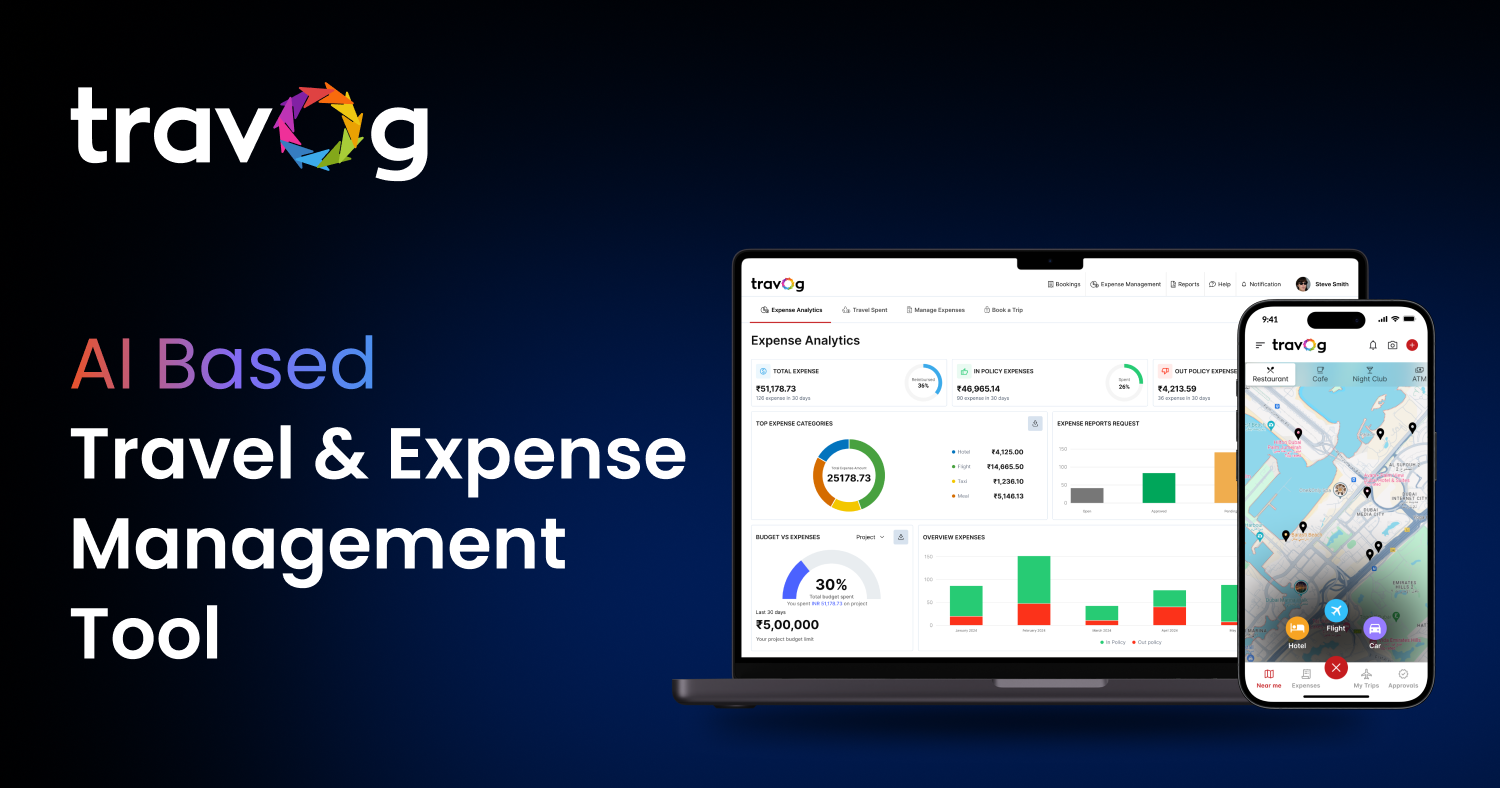
Travog 2.0 provides a new AI based personalization engine with dynamic offers and recommendations for travelers based on their preferences, company policies, and past booking history. It brings a bouquet of products together which can be booked and managed with the same tool. With extensive expense management capability, corporates can now manage budgets and approvals seamlessly on the platform. 

Travog 2.0 is built on QuadLabs’ many years of experience in managing travel and expense policies for companies of all sizes globally. Designed to significantly streamline processes, improve compliance, and enhance overall efficiency all delivered through a customizable platform with the flexibility to scale to accommodate the ever-changing needs of businesses, the new Travog companion App is the latest addition to the QuadLabs suite of Travel management solutions.

Travog 2.0 addresses the twin challenges of both Expense management and travel bookings created as per the Travel Policies of the company. It offers a comprehensive suite of features tailored to meet the diverse needs of modern businesses. The companion App makes it easy for employees to capture receipts, and submit expense reports on the go whilst tracking their reimbursement status from anywhere, at any time. All are delivered with flexible real-time reporting and financial control tools.

Not only does the App provide all the traditional features required of an Expense Management tool, including AutomatedExpense Tracking, Policy Enforcement, Approval Workflows, Analytics, and Insights, and much more but, a key feature is the ability to ensure adherence to company expense policies while creating a travel booking with customizable rules and alerts which can be updated at any time to meet changes in Travel Policy.

Travog Expense Management seamlessly integrates with popular accounting and ERP systems, allowing for real-time synchronization of data and effortless financial reporting via our analytics dashboard, all building to provide the Company with valuable insights into spending patterns, and identify cost-saving opportunities based upon data-driven decision-making.  

“We’re thrilled to introduce Travog 2.0 – the next evolution in corporate travel & expense management solutions,” said Gaurav Chiripal, CEO of QuadLabs “Travog platform is getting smarter and more intelligent as we speak. It now simplifies the expense management process, reduces administrative burden, and empowers businesses to optimize their travel spending

Travog Expense Management is now available as a B2B SaaS solution for businesses worldwide. To learn more about how Travog can transform your travel & expense management program, visit www.Travog.com

About QuadLabs:

QuadLabs is a leading provider of Leisure & Corporate travel solutions, offering a comprehensive suite of products and services to streamline travel booking, expense management, and policy compliance. With a commitment to innovation and customer satisfaction, QuadLabs’ mission is to empower businesses to optimize their travel programs and achieve greater efficiency and cost savings.

This image has an empty alt attribute; its file name is image-3.png


Contact:
Mr. Kuldeep Sharma
Kuldeep.sharma@quadlabs.com
QuadLabs Technologies Private Limited
720, JMD Megapolis,
Sohna Road, Sector 48,
Gurgaon, Haryana, India.
O (IN): +91 124 663 6999, (US): +1 646 518 9528, (UK): + 44 203 821 6814
Email: info@quadlabs.com Web: www.quadlabs.com  


Travel agency software

How Can Technology Help TMS To Streamline Business Processes and Optimize Revenue?

Once life gets back to normal, one of the most sought out experiences today would be to take a trip to make up for the year that we couldn’t, which brings back a lot of opportunities for the travel sector to grow. Travel Management System or TMS has gained more traction during this period, which also means that digitization will be at the forefront of the travel and logistics industry, switching the trend to match the era of the digital revolution. Travel management companies can benefit a lot by leaving behind conventional systems and adopting TMS. Curious to know what TMS entails and how it can enhance the profits of a company? This blog will cover all that you need to know!

What is a Travel Management System?

A travel management system assists travel managers in booking trips, tracking, and analyzing business tours or travel. Generally, a travel management system offers travel policies, travel inventory, and reporting features. A TMS also makes clients more independent by promoting self-service and removing aggregators that take extra time and charges. However, it also consists of the complete corporate travel management processes. From the planning phase to applying for travel with legal documentation and monitoring these trips, TMS has several features that simplify and streamline the entire experience so that business clients don’t have to make a considerable effort from the planning phase to applying for travel with legal documentation and monitoring these trips. Some of the best Travel Management Systems look after the following aspects:

  1. Ease of booking for managers
  2. Self-booking for clients
  3. Free multichannel 24/7customer support
  4. Substantial travel inventory
  5. Automated travel policy compliance with personalized policies
  6. A future-ready tool to scale and acclimate
  7. Zero extra charges for travel assistance
  8. Centralized invoicing
  9. Travel spends analytics

How can TMS improve operations for Travel Management Companies?

If companies wish to thrive in the ongoing decade and the ones after that, hopping on board with this technological upgrade is imperative. One can choose to look at TMS in a way as an investment that will help travel management companies get a lot done in lesser time and make more profits too. These are ways that Travel Management Systems can bring in more revenue to a travel business:

  1. Streamlined process: While earlier travel bookings and logistics were messy with too many hands in the pot, TMS has reduced the interference of third parties by streamlining the entire process from booking to the actual trip by creating a seamless transition for both travel managers and the customers.
  2. Diminished travel expenses: If everything can be done from one portal and company while most processes are automated, a travel company will be spending much less on the workforce while passing on the cost-benefit to its clients.
  3. Creates valuable corporate travel insights through data: Data analytics of customer bookings and trends is one of the biggest gold mines at the moment. A travel management company can benefit by using this data to generate actionable insights.

Traveling Management Systems have brought the business travel industry an excellent opportunity to recover from the setback of 2020 with its bespoke solutions. We remain optimistic that they will be able to rake in profits with complete travel optimization while enjoying simplified processes.

QuadLabs is one such travel technology company which is accredited and multiple award winner, offering the most appropriate solutions to travel agencies who want to achieve their organizational goals. They are a leading company operating worldwide with extensive expertise in giving relevant technical assistance to companies looking to advance their customer base and revenue.